
In Canada, Sikhs make up 2.1% of the population—over 770,000 people, according to Statistics Canada. It’s the largest Sikh population outside India.
In cities like Brampton and Surrey, Sikh identity isn’t peripheral—it’s foundational.
And yet, step into Canadian media, and that reality fades quickly.
A recent survey by the Canadian Association of Journalists found that 77% of journalists are white, with most newsrooms lacking diverse leadership. The implication is simple: Sikh stories in Canada are still often told about the community, not by it.
South of the border, the gap widens.
In the United States of America, Sikh representation has largely been confined to post-9/11 narratives, misidentification, or token diversity roles. Authentic, everyday Sikh presence in mainstream television remains rare.
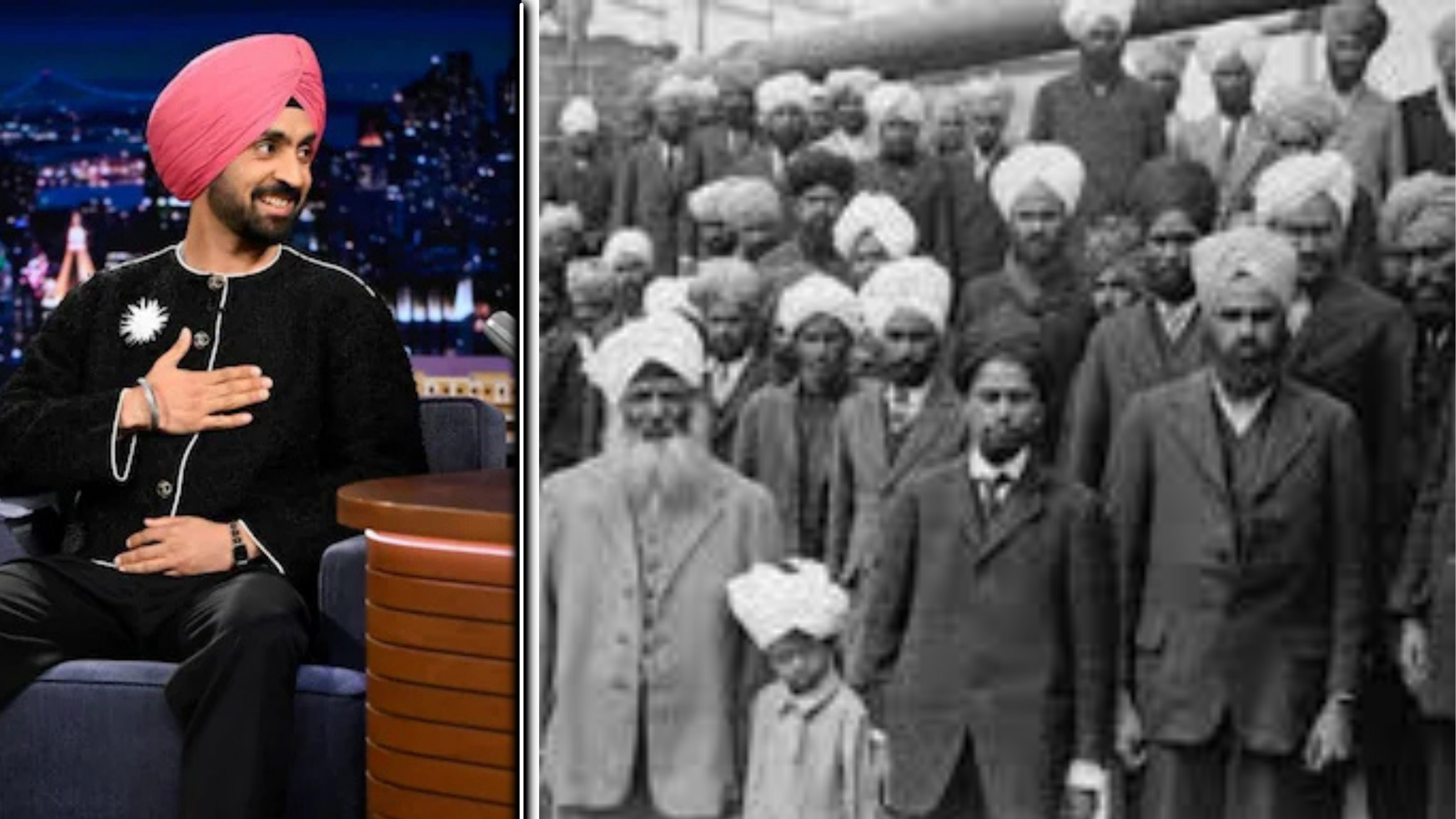
Diljit Dosanjh, featured as a guest and performing on The Tonight Show Starring Jimmy Fallon for the second time, felt different.
Not because a Sikh artist appeared, but because he didn’t dilute himself to be there.
He spoke English for the first time on a TV Show. He performed Punjabi music. And, crucially, he referenced the Komagata Maru incident—a moment when Sikh migrants were denied entry into Canada under racist exclusion laws.
Then he drew a line across time: from rejection in 1914 to 55,000 people cheering him in Vancouver today.
That number isn’t symbolic. It reflects sold-out stadium shows in Vancouver—proof that Sikh cultural presence has scaled beyond anything mainstream media anticipated.
The shift didn’t originate on television. It came from elsewhere: diaspora communities, digital platforms and Punjabi music’s global rise.
That rise has been powered not just by artists like Diljit, but also by figures like Sidhu Moose Wala.
With the release of “Eyes On Me,” Moose Wala’s voice continues to dominate even posthumously—pulling massive global attention within hours. His music has consistently carried a different energy: political, confrontational and rooted in identity without compromise.
Together, they represent two sides of the same shift:
Diljit makes Sikh identity visible in mainstream spaces
Moose Wala ensures that visibility doesn’t come at the cost of truth
Meanwhile, the lived reality remains complex. Reports from groups like the World Sikh Organization of Canada show that a majority of Canadian Sikhs report experiencing hate, with most incidents going unreported.
So while Punjabi music fills arenas and reaches late-night television, many Sikhs still navigate misrepresentation and exclusion in everyday life—and in the media meant to reflect it.
That contradiction defines this moment.
Sikh visibility in 2026 is no longer dependent on institutional approval. It’s being driven from the outside in—by artists, audiences, and a generation unwilling to shrink itself for acceptance.
From a ship turned away in 1914…
to a global stage in 2026…
This isn’t about being included anymore.
It’s about being impossible to ignore.