

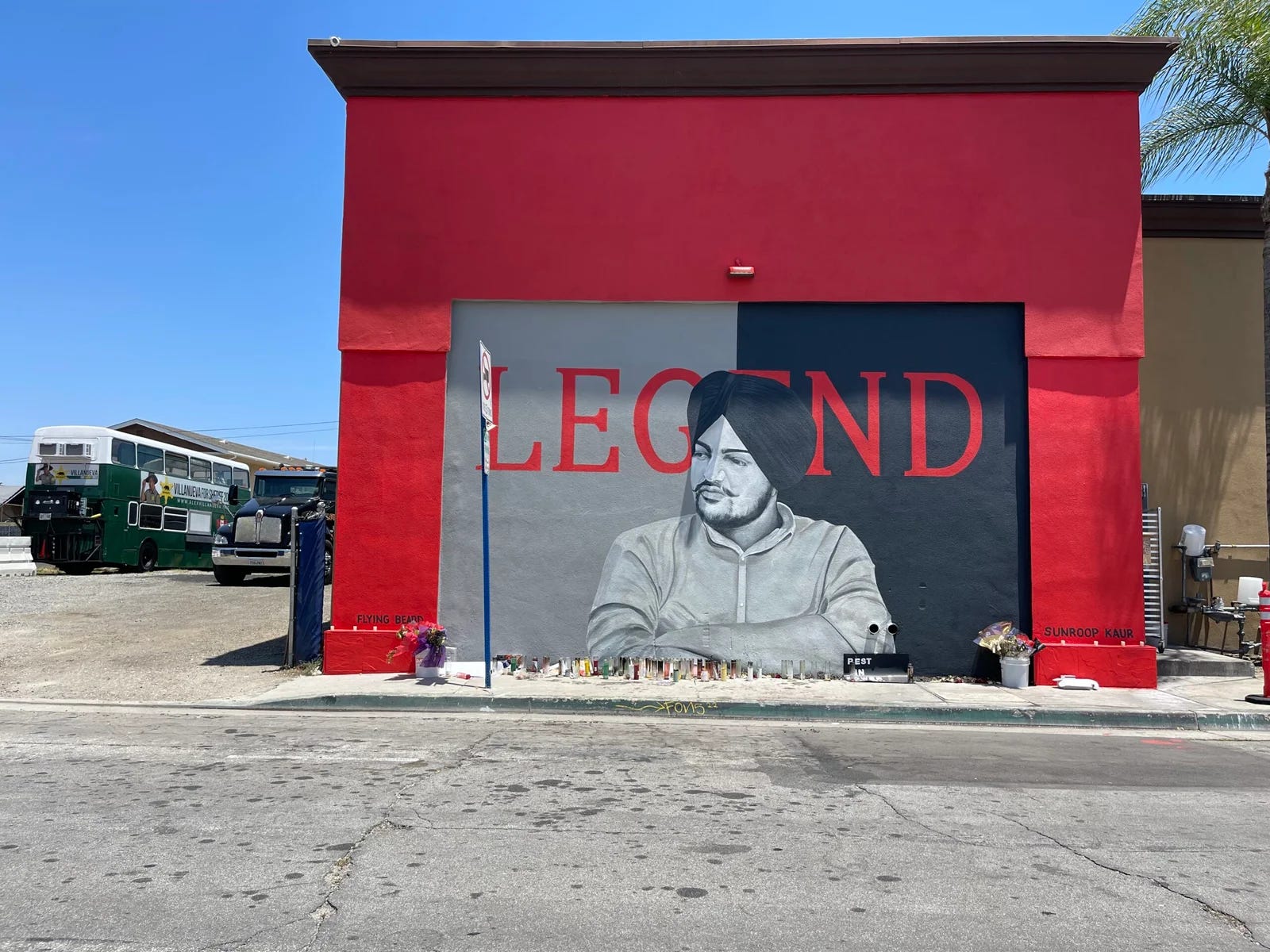
Sidhu Moosewala’s rise was not created in studios or polished boardrooms; it was born from the soil of Moosa village and propelled by the genuine faith of the people. His emergence on platforms like YouTube felt almost revolutionary.
Songs such as “So High” and “Issa Jatt” were not merely chart-toppers; they were bold declarations. They played from tractor trolleys in Punjab, blared from car speakers on Canadian highways, and echoed in hostel rooms where Punjabi youth searched for identity and pride.
What set Moosewala apart was not just his voice but his fearless originality. He blended Punjabi folk—characterized by its dhol-heavy bravado and poetic defiance—with contemporary hip-hop and drill influences.
The result was a sound that felt both ancient and futuristic. For a generation tired of dilution and imitation, Moosewala felt authentic. He didn’t seek acceptance—he demanded it.
Moosewala didn’t just enter the Punjabi music industry; he reshaped it in ways that continue to unfold today. His fearless storytelling and unfiltered lyrics painted an honest, often uncomfortable portrait of Punjab, transforming songs into statements and music into movements.
Albums like No Name felt prophetic in hindsight—defiant artistic declarations that rejected labels and warned of the consequences of speaking truth in an unforgiving system.
Even after his untimely death, Moosewala’s voice has not faded. Carefully released posthumous tracks continue to emerge, not as mere commercial afterthoughts but as deliberate efforts to preserve his message and keep his legacy alive for the generations that grew up with him.
That legacy has now entered new territory, with a global hologram tour set for the coming year. This tour will feature a stunt double on stage, allowing fans worldwide to once again experience his presence.
In an industry that moves quickly and forgets even faster, Sidhu Moosewala remains a living influence, proving that some voices are simply too powerful to be silenced.
Courage to Speak the Truth
Sidhu Moosewala never pretended that life was simple, and he never softened his words to make others comfortable. His lyrics were mirrors—sometimes uncomfortable ones—reflecting the realities of Punjab’s youth: ambition, anger, love, caste pride, systemic injustice, state violence, and the weight of history.
Songs like “295,” “SYL,” and “Punjab” were not casual releases. They were political, historical, and deeply emotional statements.
He spoke about religious hurt, unresolved wounds, water disputes, censorship, and the silencing of voices. In doing so, he crossed an invisible line that many artists fear to approach. Moosewala understood the risks—but chose truth anyway.
That courage earned him fierce loyalty from fans and equal resistance from authorities. He was criticized, targeted, and watched closely.
Yet he remained unapologetic.
For Moosewala, music was not just entertainment—it was a responsibility.
Sikhi at the Core of His Identity
At the heart of Sidhu Moosewala’s identity was Sikhi.
In an industry where image often bends to trends, Moosewala stood firm. He never removed his turban, never diluted his appearance, never distanced himself from his faith to gain wider acceptance. For countless Sikh youth—especially those growing up in the diaspora—this mattered more than words could express.
He made it clear: you don’t need to abandon who you are to be powerful.
Through his visibility, Moosewala inspired a new generation of Sikhs to wear their dastar with pride, to see it not as a limitation but as a crown. His music videos, public appearances, and global performances carried that message silently but powerfully. He normalized Sikh identity in global hip-hop spaces where it was once absent.
His connection to Sikhi was not performative—it was lived. It showed in his respect for shaheeds, his references to history, and his refusal to bow to pressure.
Global Icon, Local Hero
As his fame expanded, Moosewala never detached himself from his roots. Even while collaborating with international artists and performing across continents, he remained firmly grounded in Punjab. He carried the Moosa village with him wherever he went.
For the Punjabi diaspora, he became a bridge to home. For those who had never set foot in Punjab, he became a teacher—introducing them to its pain, pride, and poetry. He didn’t just export music; he exported culture.
Sidhu Moosewala wasn’t just representing Punjab—he was defending it on global stages.
A Tragic Loss, A Wound That Never Fully Healed
In 2022, the unthinkable happened.
Sidhu Moosewala’s death sent shockwaves far beyond the music industry. It felt personal. For many, it felt like losing a brother, a voice, a protector. The silence he left behind was deafening.
His passing forced uncomfortable conversations—about freedom of expression, artist safety, political hostility, and the cost of speaking truth in an unforgiving system. While many factors surrounded the tragedy, one reality remains painfully clear: Moosewala refused to stay silent, and silence has often been safer.
His Parents in 2026: Living With Absence, Carrying the Legacy
As of 2026, Moosewala’s parents continue to live with a grief that time has not softened. A parent is never meant to outlive their child—and yet they have carried that unimaginable weight with dignity and strength.
Their lives have become a quiet testament to Sidhu’s impact. Through remembrance, public presence, and continued engagement with his legacy, they ensure that their son is not reduced to a headline or a statistic. They speak when they can, remain silent when words fail, and hold onto the love of millions who still see Sidhu as their own.
Their pain is private—but their pride is visible.
Remembering Moosewala’s Spirit
Sidhu Moosewala was never “just a singer or rapper.”
He was a storyteller, a truth-teller, and for many, a symbol of fearless selfhood. He showed that music could challenge power, preserve identity, and still move hearts. His voice continues to echo—not only through unreleased tracks or streaming numbers, but through conversations, protests, memories, and pride.
In an era where voices are often filtered and softened, Moosewala’s legacy reminds us of the power of being unapologetically yourself.
His journey was cut short—but his influence is far from over.
Sidhu Moosewala didn’t just make music.
He made history.