

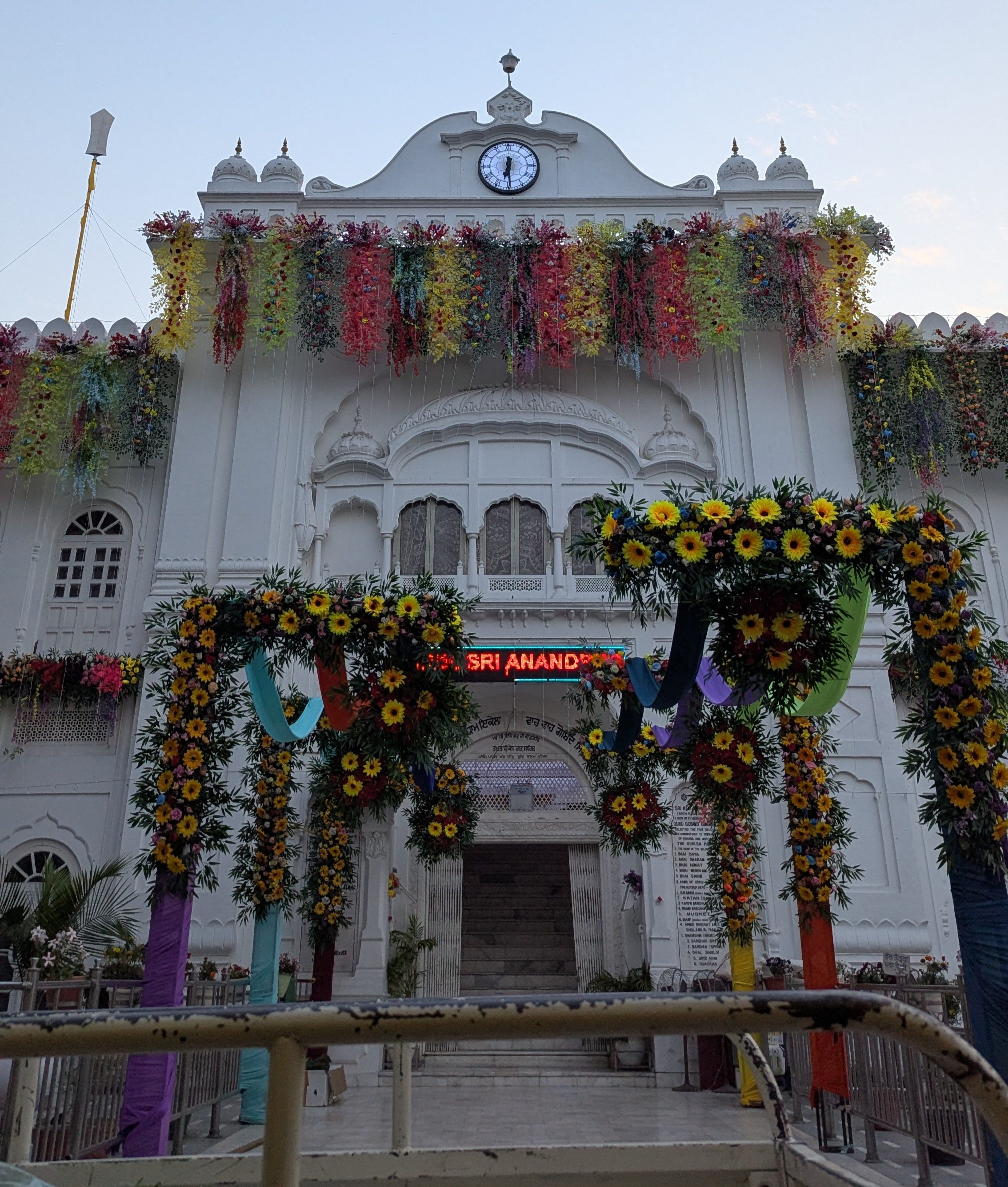
Every April, the same headlines return. Vaisakhi is often described as a “spring harvest festival” or referred to as the “Sikh New Year.”
Coverage typically focuses on parades, food, and vibrant colours—safe and familiar topics that are easy to package.
However, year after year, major outlets like CBC News and CTV News miss the core story of Vaisakhi. This isn't due to a lack of information but rather because the narrative is oversimplified. This simplification comes at a high cost.
What Vaisakhi actually marks
In 1699, at Anandpur Sahib, Guru Gobind Singh Ji called for a massive gathering.
He then did something unexpected: he asked the crowd for a head. Five individuals stepped forward, becoming the Panj Pyare—the first members of the Khalsa.
What followed was the creation of a new collective identity—one that rejected caste, abolished inherited hierarchy, and demanded a life rooted in both spiritual discipline and the defence of justice.
This moment, known as the birth of the Khalsa, is what Vaisakhi commemorates for Sikhs; it is not a harvest festival or the start of a new year, but rather a revolution.
The “Sikh New Year” Myth
To be clear, Vaisakhi is not the Sikh New Year. The Sikh calendar, known as the Nanakshahi calendar, begins on 1 Chet (around March 14). Vaisakhi, observed in mid-April, carries historical and spiritual significance but does not mark the beginning of the year.
Yet, the label "Sikh New Year" persists, indicating a deeper issue: Sikh history is often interpreted through generalizations rather than precise interpretations.
Culture is not the whole story
Bhangra performances, bright colours, and community kitchens are frequently the focal points of coverage—and while they are significant, they are merely expressions, not the foundation. Bhangra is a Punjabi folk dance, not a Sikh religious practice. Langar, often framed as “free food,” represents something much deeper: a radical, enforced equality where everyone, regardless of status, sits and eats together. When coverage leans heavily on visuals, it turns Vaisakhi into a cultural spectacle rather than a moment of historical and political significance.
A Story About Power — and Resistance
The creation of the Khalsa did not occur in isolation. It emerged during a time of political repression and social stratification.
The response was not retreat but transformation. The Khalsa introduced the concept of the Saint-Soldier: someone committed not only to personal spirituality but also to actively resisting injustice and protecting others.
This was a direct challenge to systems of power, and that context matters. Without it, Vaisakhi becomes unintelligible.
Why This Matters in Canada
In April 2019, Canada formally recognized Sikh Heritage Month, building on earlier provincial legislation, such as Ontario’s 2013 act.
The intention behind this recognition was not merely to celebrate but to educate. Yet, much of the public's understanding of Vaisakhi remains superficial.
This lack of depth is not just a missed opportunity; it is a disservice to a community whose history is deeply intertwined with the questions of equity, pluralism, and justice that Canada is still grappling with today.
When media coverage reduces Vaisakhi to mere aesthetics, it sidelines those critical conversations.
Raising the Standard
This discussion is not about policing language; it’s about accuracy and respect. The media has the resources to tell this story properly.
This means:
- Moving beyond shorthand explanations
- Engaging with historians and community voices
- Distinguishing between cultural practices and religious significance
It also requires recognizing that not all celebrations are interchangeable and that traditions cannot be collapsed into a single narrative.
The Bottom Line
Vaisakhi is more than just a festival. It marks the creation of a community built on courage, equality, and accountability.
It signifies a refusal to accept injustice and a commitment to confront it. Reducing Vaisakhi to a mere harvest celebration does not just miss the point; it erases it.
In a country that prides itself on its multicultural understanding, we should expect better.